Showing posts with label panoramas. Show all posts

Saturday, 29 December 2012

2012 Round Up

As the end of the year draws near we approach that time when journalists the world over start getting all retrospective and nostalgic about the passing of another 12 months. Whilst it seems like this is a reasonable enough tac to take the reality is that it is a quick, easy and lazy way to generate another week of output on the cheap; and who am I to argue with such a proud tradition? So here, having gone to absolutely no effort whatsoever, are a collection of some of the better photos from the blog over 2012. Some of them are taken from the most popular posts of the year and some of them are just ones I like. Normal service will resume in the New Year. Enjoy!


This is one from a post on how to incorporate textures into images, the photo itself is from Porto.


This shot of Tower Bridge could be improved by returning early morning when the sun would be off to the left and less harsh.


This close up of a leopard is from a post on abstracted animals.


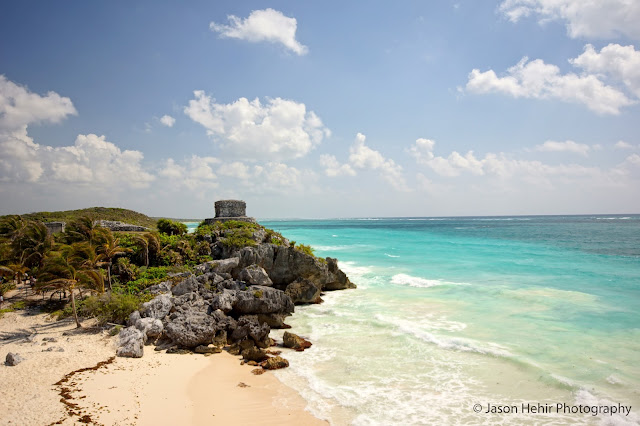
Although the town itself is forgettable Tulum is one of the most impressive archaeological sites I've been to.


Chichen Itza, the second most visited place in all of Mexico.


This shot of a hummingbird is a bit out of focus but was the best I managed to get and the culmination of a lot of effort.


I just love the colour palette in this picture.


Sunset on the South Bank: heaven.


From the same post as above, once the sun had gone down we went to the top of One New Change for this amazing view of an icon of London.


This panorama of Mount Esja is quite beautiful when viewed blown up, even if I do say so myself.


This is one of Sue's favourites from our trip to Vietnam.

Sunday, 14 October 2012

Reykjavik


Reykjavik, harbour, Iceland, sky, sea, mountain, cloud, sculpture, reflection, mount Esja, Faxafloi
The reflection underneath is a bit spidery for my liking.....
Takk. That's how you say thanks in Icelandic; nice and easy. Every other word in the language, every single other word, is completely unpronounceable. You might be forgiven for thinking that there would be some slight similarities between Icelandic and English, they both have a solid Norwegian base to them from when  our two islands were colonised by the vikings in the last half of the first millennium; but you would be wrong. Very wrong. Icelandic is actually more like ancient Norse than modern day Norse is; due to centuries of isolation and a policy of actively coming up with words with an Icelandic root instead of borrowing from other languages it has evolved very little. As examples of the way they police their language: their word for computer translates as number prophetess; telephone is long thread; mobile phone is travelling long thread; and, rather worryingly, they have no word for interesting. To hear Icelandic spoken is, however, quite interesting. It has a fairly quiet and reserved tone to it, as do the people in general, but every now and then, out of no where, they throw in an exaggerated ook sort of a noise as if they're trying to out honk one of the local geese that populate the area in place of the pigeons you normally find in most cities. Imagine a drunk Welshman doing a Monty Python impression and you might be half way there.

Names, of people, are also a little unusual. Similarly to Russian they have a patronymic and matronymic system; basically you come up with a forename for your new son but his surname is already decided - it's his mother's name with son added onto it. Concordantly, the surname for a girl is her father's name followed by the Icelandic for daughter, dottir. To clarify, I would be called Jason Pearlsson, my wife would be called Susan Davidsdottir and SKY news correspondent Kay Burley would be Kay Satansdottir. Simple.

So it was that Sue Davidsdottir and I set off into this alien culture with aspirations of whale watching and a good view of the aurora borealis; sadly, we would only achieve one of these.

Reykjavik, harbour, Iceland, sky, sea, mountain, cloud, sculpture, reflection, mount Esja, Faxafloi

Reykjavik was first settled by Norse colonists in the year 870 and was called such because you can just about make out steam from nearby hot springs (Reykjavik means Smokey Harbour); the city, indeed the country, was mostly just a fishing and sheep farming outpost for the next several centuries and when the city received its charter from their Danish rulers in 1752 the population had grown to a colossal 167 individuals. The charter wasn't granted to the people themselves or some sort of mayor or ruler but to a corporation that was tasked with developing native industries with a view to improving living conditions of the indigenous population. Today there are 120,000 people in the city and 320,000 in the country as a whole and they are free to enjoy what is widely acknowledged to be amongst the best healthcare and educational systems in the world. This is probably in no small part due to the fact that 80% of the tax collected in Iceland is spent on those two areas alone. This, combined with the fact that they have no standing army, 100% of their power comes from geothermal or hydroelectric sources and a few other key indicators, has led to Iceland being rated the most peaceful country on Earth.

Reykjavik, Iceland, Tjomin, lake, sky, town houses,
The most built up area in all Iceland; some of those buildings are as many as four storeys high!
Despite being the largest city in Iceland by quite some distance Reykjavik has maintained the feel of a sleepy fishing town. The picture above is from the top of the Hallgrimskirkja cathedral looking west towards the harbour over the most developed part of the city but it looks more like a leafy suburb. As they have chosen not to build upwards it does mean that the urban sprawl continues for some miles east and south and is beginning to swallow up what used to be smaller satellite towns in the same way that Copenhagen and Oslo have done.

The panorama below is of the far side of lake Tjomin which nuzzles up against the side of the Icelandic parliament thAlþingi, pronounced AL-thing, the oldest parliament in the world at well over 1,000 years old. I like the contrast in the leaves of the trees as they begin their journey from green to brown through yellow and red. It also nicely highlights the degree of variation that is to be found in Icelandic architecture; it's quite unusual to find two buildings next to each other that are the same and this makes walking the streets of the capital all the more interesting. This is in stark contrast to the unrelenting tedium of new, suburban developments in the UK where conformity seems to be the order of the day.

Reykjavik, Iceland, sky, lake, cloud, panorama, trees, autumn


I really liked Iceland. As soon as I stepped off of the plane and saw the bleak, rugged landscape and felt the icy wind bite I knew that I was going to enjoy this rough, harsh country. When I go on holiday I prefer to see mountains and ice over sun and sand; I like to feel that at any moment the weather could turn and you'll be hit with a storm that makes even getting something to eat an ordeal. This is just as well, because this is what we got. Our first day was wet, cold and blustery; pretty bad weather-wise. From bad it turned to brutal as winds reached gale force and the rain got heavier and heavier so whilst I enjoyed doing battle with Iceland and its weather it did mean that photography opportunities were few and far between, not if I wanted my camera to avoid a soaking in any case.

In my next post I'll describe the trials and tribulations of sightseeing in a country that is the second most volcanic in the world and sat between two of the roughest oceans we have. For now I'll say that there was a brief moment of respite; for two hours on our final morning in Reykjavik the rain stopped, the wind dropped  and the clouds parted. For two hours the sun shone through and gave me some of the most beautiful, crystal clear light I have ever seen. When I saw how things had improved I instigated a desperate rush around the city revisiting the key landmarks that we had been perusing under much less favourable conditions for the last few days. Even though it was almost noon the sun was still very low in the sky as we were only a degree or so from the Arctic circle. For the shots of Mount Esja and the Sun Voyager sculpture the light also happened to be coming in from the side and so was perfect for giving depth to the mountains. I am very happy with the panorama below, it is well worth looking at on a big screen and I foresee a canvas print of it on my living room wall in the not too distant future.


Reykjavik, harbour, Iceland, sky, sea, mountain, cloud, panorama, Faxafloi, Mount Esja
Click to enpanaramatudinate


Sunday, 25 March 2012

Tower Bridge


Think of a London landmark.......

Got one? Okay, what was it? The Eye? The Gherkin? St. Pauls? Big Ben? (don't bother, pedants) I'm willing to wager many of you would have picked Tower Bridge, and not just because I've shoved a great big picture of it in your face. It is, truly, iconic; recognised the world over as a symbol not just of London but also the Victorians that built it. But why build it? The river Thames is the life blood of London but it is also a significant barrier. In the mid 19th century east London had become one of the largest ports in the world and there was a commensurate explosion in it's population; in fact, from 1831-1925 it had a higher population than any other city on Earth. All these people obviously needed to get around and at this point there was no crossing further west than London bridge; there was no Rotherhithe tunnel, Dartford tunnel or QEII bridge although the Blackwall tunnel wasn't far behind, it opened in 1897. This bottleneck led to massive congestion and journey times of several hours to cross the river. But it wasn't simply a matter of throwing up a standard issue bridge; this was one of the busiest ports in the world and the design had to allow for the passage of ships of all berths; with this in mind the City of London Corporation opened the design process to public competition.


Over 8 years fifty designs were submitted before one that fulfilled the stringent criteria was settled upon and the successful architect was one Horace Jones in collaboration with John Wolfe Barry. This was not without controversy however. Although there were submissions from established and proven engineers like Joseph Bazalgette, who designed the Victorian sewer system that I mentioned in a previous post, Jones' design was deemed the best. The only problem was that Jones himself was on the judging panel; so no conflict of interest there, then. Bazalgette didn't do too badly though, the Hammersmith bridge is one of his. Having muscled his way into the contract Jones actually died only one year into construction at which point George D. Stevenson took over, and that's probably a good thing. Jones' original design was merely to clad the structure in brick, it was Stevenson that decided to clad it in Cornish granite and Portland stone and add in the neo-Gothic elements that are very much a part of it's character to this day.


Right, let's break out some stats. 70,000 tons of concrete went into sinking the two piles beneath the towers, which themselves, combined with the walkways, needed 11,000 tons of steel to be completed. It's actually three bridges in one; two suspension bridges linked by a bascule bridge (bascule being French for see saw). Prior to 1976 the bascules were operated by steam power, the steam was collected in 6 accumulators so that there was always sufficient power at hand whenever a boat needed to get through. This was the most sophisticated design in the world at the time and meant that it only took about 60 seconds to raise the bascules to their maximum 86 degree elevation. The walkway across the top exists solely so that foot passengers could continue to cross the river when boats were passing but, due to lack of use, they were actually closed 16 years after opening. They were reopened again for tourists in 1982.

A panorama from the centre of the bridge. From left to right you have City Hall, the Shard, HMS Belfast, Tower 42, the Gherkin and the Tower of London. Click to en-awesomify.
The history of this bridge has not been without incident, no less than three planes have been flown between the bascules and the walkway; firstly, in 1912 pioneering avaitor Frank McLean flew down the Thames in a seaplane but, to the consternation of the local constabulary, he flew underneath London bridge and between the walkway and bascules of Tower Bridge. The second time was by an RAF pilot that was annoyed by a lack of celebration for the organisation's 50th birthday in 1968 and the last time was in 1973 when a somewhat unstable stockbroker pulled off the feat twice before flying on to the Lake District and killing himself as his plane crashed. And let's not forget the incident when a number 78 bus found itself rather near the gap as the bridge began to rise. The driver, Albert Gunton, took the split second decision to floor it and jump the small gap that had opened up.


My trips to the bridge have not been so eventful, I've never even seen it raised up, not for the lack of visiting though. Tower Bridge marks either the start or end point of possibly my favourite walk in all of London which basically consists of a loop along the north and south banks crossing at Tower Bridge and Westminster and I walk it regularly. The photos in this post are from two separate trips about two weeks apart. The daytime ones were taken on a random day off earlier in March and the night time ones were a couple of weeks earlier after a particularly crappy day at work; I was feeling rather stressed and could think of no better way to chill out than to go and visit one of my old buddies. I had wanted to get the sundial and fountain shots for a long time, unfortunately I was there at completely the wrong time of day so I was shooting into the sun. I need to go back in the early morning to get the best light for this direction.

I've also thrown in a picture of the Shard just because I've become slightly obsessed with that building. I can't wait for it to be completed and the viewing deck to be opened up to the public, the views will be spectacular - eleven months and counting. The last picture is clearly a long exposure but it's not the best as my tripod wasn't high enough to see over the railings so I had to do it handheld, which was less than ideal. Still, it leaves me something to aim for when I inevitably return, for return I will. This talismanic structure is, quite literally, one of my favourite places on the planet and I'm always excited to see it, like an old friend that I haven't seen or heard from for a year or two, but I know that time and distance won't have diminished our relationship. A lot of water may have flowed under the bridge but my love of this city grows stronger and for me there is no greater emblem of this than my old friend, the Victorian masterpiece, Tower Bridge.

Sunday, 5 February 2012

Snow What?

Well, it finally happened. We've had a very temperate winter so far here in the UK, one of the warmest on record, but this week Europe has been gripped by particularly cold Siberian weather fronts and some snow has finally made it to the majority of Britain, even the south east. So for those of us that have been out and about in the white stuff here is a post that's as fresh as the snow depicted. These images were hand reared on Hampstead Heath, they have been fed only the choicest, natural, organic feeds and were humanely dispatched in a low stress environment. They were rapidly blogged and are to be consumed with 48 hours for the freshest flavour.

My favourites are the panoramas (click them to enamazingify) and this first one. As soon as I saw everyone sledging down the hill I was put in mind of this classic painting by L.S. Lowry.