Showing posts with label Vietnam. Show all posts

Saturday, 29 December 2012

2012 Round Up

As the end of the year draws near we approach that time when journalists the world over start getting all retrospective and nostalgic about the passing of another 12 months. Whilst it seems like this is a reasonable enough tac to take the reality is that it is a quick, easy and lazy way to generate another week of output on the cheap; and who am I to argue with such a proud tradition? So here, having gone to absolutely no effort whatsoever, are a collection of some of the better photos from the blog over 2012. Some of them are taken from the most popular posts of the year and some of them are just ones I like. Normal service will resume in the New Year. Enjoy!


This is one from a post on how to incorporate textures into images, the photo itself is from Porto.


This shot of Tower Bridge could be improved by returning early morning when the sun would be off to the left and less harsh.


This close up of a leopard is from a post on abstracted animals.


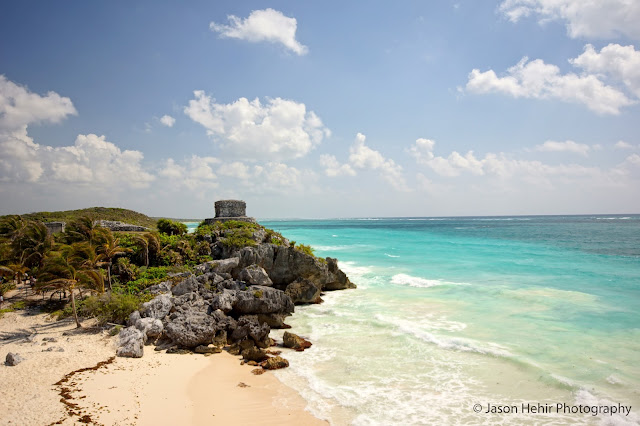
Although the town itself is forgettable Tulum is one of the most impressive archaeological sites I've been to.


Chichen Itza, the second most visited place in all of Mexico.


This shot of a hummingbird is a bit out of focus but was the best I managed to get and the culmination of a lot of effort.


I just love the colour palette in this picture.


Sunset on the South Bank: heaven.


From the same post as above, once the sun had gone down we went to the top of One New Change for this amazing view of an icon of London.


This panorama of Mount Esja is quite beautiful when viewed blown up, even if I do say so myself.


This is one of Sue's favourites from our trip to Vietnam.

Sunday, 11 November 2012

Mekong and Markets


Mekong, Vietnam, boat, sky, cloud, forest, pier, jetty
One of the larger branches of the mighty Mekong river

It's been a while but there has always been one last part of my trip through Vietnam that I wanted to write about. 

The final leg of our journey was in the south of the country, basing ourselves in Ho Chi Minh City we went on a two day trip to the Mekong Delta. Known as the rice bowl of Vietnam this is a very fertile region, as most deltas are, the river having brought rich soils and other detritus along for the ride from higher ground. After more than 3,000 miles of meandering from Tibet down through south east Asia this mighty river, the 10th longest on the planet, fans out over 15,000 sq miles of the country (see this image from NASA).

Mekong, Vietnam, boat, river, water, forest, trees
Once you stray into the tributaries this is how the Mekong looks. For miles. Endlessly.

This is one of those environments where the people that make it their home live almost semi-aquatic lives; there is no escaping the river. It impacts every aspect of their being. Pieces of actual solid ground are few and far between, especially nearer the coast. Raising your family, your livestock or your crops presents even more challenges than normal. People don't have cars here, they have boats; they don't go for a walk, they go for a swim. They say there is a period of the year when it doesn't rain quite so heavily as at others, but this river never dries. Picture vast islands of bamboo growing straight out of the water and you'll have a good idea of how much of this landscape looks.

Mekong, Vietnam, boat, sky, cloud, market, people
If you look through the little windows you can see that this boat is stuffed to the gills with cabbages

What land there is has been aggressively cultivated in the last two decades as the Government sought to change Vietnam's status from a net importer to an exporter of rice, and it worked. Every bit of solid ground I saw either had a building on it or a paddy field thus highlighting the age old struggle between man and his environment. Less people in Vietnam now go hungry than they used to, but the Mekong has suffered and is not as large or diverse an ecosystem as it once was. Where the correct balance is on this scale of survival I couldn't say. It's easy to argue that this ecosystem should be protected from man at all costs but I'm pretty sure I'd strangle a panda with a tiger's tail if it meant my children wouldn't starve.

woman, market, Can Tho, Vietnam
A slow day at the market

This aggressive agriculturalisation of the landscape has led to an influx of people from across the land. Historically the Greater Mekong region of South East Asia has been one of net emigration as a large population has had to do battle over very few jobs. In recent years though, the region has become one of net immigration as the demand for labour has increased. As the population has increased so the demand on local resources has seen a commensurate rise; in a land as fertile as the Mekong perhaps this doesn't seem like such a bad deal; the land is very fertile and can support many. But if there's one thing that we humans excel at it's finding ways to ruin a good thing. The laws of entropy are fairly unbending on this one, ultimately something will have to give.

market, Vietnam, Can Tho,
Eels for dinner, anyone?

On the upside, one thing that all these people bring with them is their culture. Traditionally the hub of any town is it's market place in the town square. But what if the place you live doesn't have enough land to put a town square on? Easy, simply make your market float, of course. If you visit the Mekong then you won't have to wait long until you see one of their impressive floating markets; it seems that everyone just turns up with a boat load of produce, they tie a few examples of said produce to a big, vertical stick so that you can see what's being sold at a glance and then they just float around each other bargaining goods like traders the world over.

Vietnam, market, Can Tho
This woman pumps air into the bowl to keep her crayfish type creatures alive

Can Tho is one of the very few, what we would call, proper cities in the Mekong; it has a large freshwater port and is the major mercantile centre of the region. The large market that the town plays host to has been covered over in recent years to make it a bit more tourist friendly and it's well worth a look. Asides from all the exotic fruits like lychees (which I could do without) and dragon fruit (which is delicious) they have a good stock of live animals that you can buy fresh for a bit of home slaughtering.

Vietnam, market, Can Tho, lychees, fruit
That's a lot of lychees
It's difficult to imagine a river delta that just goes on for so long. I guess the closest thing we have to it in this country is the Fenlands; the unending flatness, the constantly waterlogged ground and ever present risk of flood. One of the things that I most remember the area for is that I finally got to eat some snake, snake curry to be precise. It was quite tasty, it sort of has the texture of pigs liver but a taste nearer to that of kidney. I recommend it.

My last photo here is one I have included because Sue really likes it. It's of her as she walks through the market of Can Tho. It has a nice simplicity to it but generally leaves me feeling sombre. Where is she walking? Why is she alone? As I took the photo I know that she was just trying to catch up to Eleanor and get out of the pissing rain but I guess that's the power of a photograph.

Vietnam, market, Can Tho


Thursday, 1 March 2012

Birthday Blog

One year. That's how long I have been writing this blog now. It is customary upon reaching such milestones to undertake a little naval gazing and so I beg your indulgence. This is my 42nd post in 52 weeks which, frankly, is a pace I sometimes struggle to keep up. My first post, was read by three people and one of those was probably me; I can now expect to get a few hundred readers per month, so thank you to all of you that do. To mark this auspicious occasion I have amassed 10 of the best photos posted from the last year. I have selected them based on a mixture of my own personal preference, comments I have received from you guys and which posts have got the most views. So, in no particular order.....

This is a view of the Nile from a hill top cafe in Aswan

Close up of hieroglyphs with very shallow depth of field

You need straight trunks and high branches to get this classic shot

Possibly my favourite picture I've ever taken

This is a close up of a goat's horn with it's out of focus fur as the background. I love the detail

This shows what can be achieved with a long exposure and a, mostly, steady hand


It took a lot of work, good timing and a good deal of luck to get this shot

I love the atmosphere in this shot of my wife in a Vietnam market


I like the depth of field in this one, it nicely sums up the look of a Vietnamese temple complex

This is Eleanor and Sue in the War museum in Ho Chin Minh City, the girls stance and the sobering content make for a compelling image

Saturday, 28 January 2012

Textures


Taken at a friends wedding (not that of those mentioned), the effect is only slightly marred by the fact that I lent the cards against a pint of lager

In an attempt to not be quite such an old fuddy duddy all the time I have been experimenting of late with digital post processing of photos. Whilst the gold standard of photography will always be to get the picture as perfect as possible in camera, more often than not something somewhere will go slightly awry. Cue PhotoShop, Lightroom, Aperture or any other of a multitude of suites out there to help process and correct your shortcomings. I have PhotoShop Elements which is basically a stripped down version of the market-dominating behemoth that retains much of the functionality of it's big brother but at about a fifth of the price.

This is one of my favourite shots from my trip to Porto. The old terracotta roofs really lend themselves to the ageing process

As I read about, practice and learn more about photography the more it seems to be the case that pretty much everyone fiddles with their pics to some degree. Those that literally never make any adjustments seem to be regarded as almost puritanical, looked on slightly askance as if they're some sort of idiot savant - brilliant, but slightly odd, and not in a good way. They're bracketed away with those people who will spend two days travelling to a location but always restrict themselves to just one perfect exposure which they'll spend literally all day composing. These people produce superb work but normal people shouldn't, couldn't, be expected to be the same way. 

Another thing that learning more about photography has done is give me the ability to spot more and more modifications in photos wherever I see them be it at bus stops, galleries or in books of fine art photography. I'm not sure if this is a good thing or a bad thing yet. On the one hand it can provide inspiration and ideas about new techniques that I might be able to put into practice, but on the other hand an image that previously would have just made me say, "Wow", can now occasionally have me thinking the equivalent of, "I can see the strings". On balance it's probably a good thing. The line between too much modification and just right is entirely subjective. The full spectrum can be seen from fine art puritans at one end to fashion magazines, that seem to deal in works of complete fiction, at the other.


This is the first texture I ever attempted. I was trying to make it look like an old photo that had been printed and mistreated over many years
And so it is that I have decided to play around with these things; obviously the examples here are in no way subtle, this is more than a simple Levels or Curves adjustment. I've deliberately given them all a very aged and antiqued feel; the affect is achieved by blending in a texture layer and the addition of a little vignetting. Different textures will obviously have different effects, and not all photos will lend themselves to such modification so the selection of the two layers you're going to combine is quite important. 


Before I tell you how to go about creating these sorts of photos I'd better let you know where you can get some textures. Luckily, there are lots of very nice people out there who let you have them for free. Go to Flickr and search for 'free textures', this should throw up plenty of results. There are literally hundreds if not thousands  of them there but do please make sure that they are available for use. Check to see if there is a Creative Commons license for the image and if the creator has any conditions of use. Often they will just request a courtesy thank you or a link back to the original texture or something along those lines. There are also good websites dedicated solely to such things like CG Textures. Sometimes you will find that a good photo and a good texture won't necessarily go together; the colours and tones involved and the type of effect you're trying to achieve will all need to be considered in selecting both your starting image and the texture you want to combine it with.

From Vietnam, the old skool bike and conical hat add to the sense of times past
I'm going to end with a quick description of how to go about blending the texture layer into the image you've selected. Unless you own Elements or PhotoShop and intend to actually do this you can probably stop reading and carry on with your life. For the rest of you: sit up straight and pay attention, I won't tolerate slacking. Fortunately, this is actually all quite easy; instructions are for PhotoShop Elements although I'd imagine it's pretty similar for the grown up version. Here's how:

- First up, import your two images into the Elements Organiser and then into the Workspace ready for editing.

- You need your two images to be the same size so go to your photo and click Image>Resize>Image Size. Make a note of the pixel height and width of your image and then go to your texture, follow the same command path and enter in the figures. Make sure you have Resample Image ticked. Your texture will now be stretched or shrunk to the same size as your photo.

- On your texture click Select>All and then press Ctrl+C, go back to your photo and press Ctrl+V. The texture will now appear over the top of your photo as a new Layer.

- It's not really necessary but if you like you can rename the layer to distinguish it from others you might use later by right clicking on the layer in the Layers box on the right hand side and selecting Rename Layer.

- As things stand the texture layer is completely opaque so now we begin the blending process. Making sure you have your texture layer selected on the right hand side (as opposed to Background) simply click the drop down box where it says Normal and select one of the myriad blending options.

- Pick any you like but the most useful will likely be Overlay, Soft Light or Hard Light. Once you have one you like you can also modify the percentage opacity by clicking the drop down box.

- The texture you have selected may have a vignette already in it but if not then adding one in can really contribute to the sense of it being an old photo. To do this select the Background layer and then click Filter>Correct Camera Distortion. This tool is normally used to remove vignettes but in this case we're going to use it to add one in.

- On the right just move the sliders for Amount and Midpoint around until you achieve the effect you're after. You should be careful at this point as this alteration is a permanent one that affects the background of your image. Unless you're certain of what you're doing it is prudent to save a copy beforehand so that you can always go back to it if you mess things up. This is a good tip just in general for when you are playing about with your images.

- For some reason this renames the Background layer as Layer 0. You can either ignore this or rename it again.

That pretty much does it. If you like you can add in a standard Curves or Levels layer to lighten/darken the general palette of the image. Save the image as either a TIFF file or PhotoShop file to preserve all the layers in case you ever want to go back to them later on. You should also save all new images as a JPEG in case you ever want to e-mail them or upload them somewhere, like to an exciting blog that you write.

And that's that; give it a try and let me know how you get on. As I wrote those steps I made a new image to make sure I didn't miss anything out; the texture is most clear in the previously light blue sky and I've applied a pretty heavy vignette to the corners to demonstrate the effect. Here it is:

Ta dah!

Sunday, 1 January 2012

Portrait of Vietnam


Time for another post on Vietnam I think. For the bulk of this post I'm going to try to relate an encounter I had with a young man I met in the town of Da Lat towards the south of Vietnam. The pictures will all be of my attempts, with varying degrees of success, at taking photos of actual human beings.


*          *         *         *          *


Before I set off to Vietnam I was determined to have a go at getting some portrait work done. It isn't something that comes naturally to me as I'm not much of a people person and I tend to get a bit shy about asking strangers if it's okay for me to pap them. Also, the second you ask if you can take someone's photo they often stop doing the very thing that made you want to take a photo of them in the first place. With this in mind I took a mixed approach; sometimes I would ask permission, often providing a monetary incentive, and at other times I would surreptitiously snap on the sly for a more natural look.

This lady seemed to just be chilling out during the scorching midday heat in Hoi An

*          *          *          *          *


He didn't ask me not to use his real name, and perhaps it's an unnecessary precaution, but the conversation I had with a young man that I'm going to call Tuan (a common Vietnamese name) was probably not one he would want broadcast around the world. It's unlikely that his comments would ever be traced back to him but discretion is the better part of valour.

I met Tuan in the mountain town of Da Lat; his job was to cover the reception of the hostel we were in for the night shift which appeared to run 7pm-7am. We had arrived into Da Lat later than we had anticipated as our overnight train from Da Nang hadn't set off til one in the morning and then we had to get a bus ride of several hours duration up into the mountains. Once we arrived we were a pretty ragged looking bunch who just wanted a shower and some clean clothes.

This little boy and his mother were trying to sell bananas and water to passing tourists at the floating market in Ben Tre

It was Tuan's job to collect our passports and take down our details. This wasn't unusual, everywhere we had stayed up until this point had taken our passports, but they had either just taken a quick copy or kept them for an hour or two and then returned them. Tuan wanted to keep them permanently in the hotel safe. This was not deemed acceptable by some members of our party and so I was tasked with their liberation. I explained the situation to Tuan but he couldn't quite fathom it, he couldn't see why we had a problem and, judging by the massive stack of passports he had, most guests did not have a problem with this. After going in circles for a while he finally told me why he had to keep hold of them; each day, at about half past seven, he would take the passports of all the guests in the hostel that day to the local police station and give the details to the authorities. Again, this didn't feel particularly unusual, I presumed this is what had been happening our whole trip, except that everyone else had been happy with copies. A quick conflab with the girls and it was decided that we didn't want our passports going on an excursion without us and so I went back to Tuan to try to find a mutually agreeable resolution. After much circular debate, and to the incredulity of Tuan, I decided I was going to go with him to the police station.


This is the son of the tailor in Hoi An that I mentioned in a previous post. He was shy initially, hanging back and playing with his mothers measuring stick.

Da Lat, being in the mountains, had a climate similar to Britain at that time and so it was that the two of us set off into the cold, dark, rainy night and begain to chat about things other than the administrative burden of a hostel. It turned out to be about a 15 minute walk each way which gave us plenty of time to exchange stories. He started, which I often find to be the case in these sorts of situations, by asking about the Queen and how it is she goes about ruling our country. This led to an impromptu tutorial on the current coalition Government that we have; not an easy task under any circumstance. Once we'd built a bit of rapport I decided to give him a bit of a grilling on what life is like in a one party Communist state. Did he feel free? Did he want to vote? Is life good? Would he like to see change? It should come as no surprise that he wasn't very positive about the Government. He talked about how anyone who wanted to build themselves a house had to not just go through the convoluted official channels, but also to pay the appropriate bribes. These are particularly extortionate if you're not a member of the Communist Party. Far from membership being compulsory, as in many one party states, there are actually lots of people who are not allowed into the Party: anyone with a history of dissidence, either personally or in their family, anyone that has links to America, and anyone that is too overtly religious, especially Catholics (although traditionally inclined to Buddhism and Taoism, most Vietnamese would call themselves atheists).


Over time he stopped shying away and started behaving more naturally.

At this point we had arrived at the police station where Tuan dutifully joined the back of a small queue of similar looking young men, all with a little bundle of passports. Inside there was one rather corpulent and surly looking officer who was mostly watching what appeared to be the Vietnamese version of East Enders. He alternated between completely ignoring the young lads and suddenly barking something unpleasant sounding at them. The boys all took it in turns to sit at a rickety, old desk and enter the details of their guests into a large, old ledger of the type you would imagine went out of fashion in Victorian times. Although the amassed boys may have known one another no one spoke. The station had a severe and unfriendly air, the boys did not want to be here, they didn't want to have to do this; previous experience implied that it was wholly unnecessary, I suspect that it was merely the whim of this particularly objectionable police officer. When Tuan's turn came around he appeared to offer a few words of explanation as to my presence as I was rather sticking out; the officer gave a sort of snarl and turned back to his soap opera. He didn't look at me.


This lady was sculling her way through the floating market of Ben Tre in the Mekong

As we returned to the hostel Tuan began to talk more effusively. He clearly didn't like the local police. It is the police that insist on the bribes so that new house builds go smoothly. He talked of how dangerous the town was because the police didn't go out at night. The police get paid a lot to do very little, so long as local criminals don't involve the tourists then they are pretty much left alone. He told me of the time that a woman who had just been assaulted by her husband came running into the police station for protection only to be ordered to return to her husband and apologise to him. Officers are given big houses very cheaply and can afford to send their children to school and care for ill family members. It would seem there are definitely advantages to being on the inside.


This man is playing the traditional dan nguyet, or moon lute; essentially a 2 string guitar that sounds like this

During our earlier negotiations I had felt guilty for not trusting Tuan and our short journey together had revealed him to be a bright, honest young man who was just trying to not piss off a guy who could probably make his life very difficult for him. I talked to him a few more times over the couple of days we were in Da Lat and always found him to be very interesting and informative. One time when we had an internet connection to hand we looked at maps of each others countries and discussed our homes more; we talked about the Arab Spring and how China was once again trying to bully and intimidate Vietnam. He spoke bitterly of the Chinese. Like many of us, although Tuan disliked the people in charge he was clearly very fond of his country, it's landscape and it's people; and rightly so. He was full of suggestions of places for us to go in the south of his country even though he himself had never had the chance to visit most of them. Tuan was just one of several people that I met in Vietnam that have really stuck in my memory. Generally I keep to myself both at home and abroad; I'm not a talker - not when sober. But one thing I do love is being able to get a first hand perspective on situations I could otherwise never really understand. After spending one fast paced holiday in Vietnam I would claim no special insight into the country's workings but, when talking to Tuan and people like him, for a few short minutes, I got it.

As we arrived back at the hostel from our little trip to the station I asked Tuan, given all the monetary benefits in such a tough environment, if most young men aspired to be police officers. "No," he said, "we'd rather be poor."


This lady was having a slow day in Vinh Long market in the Mekong delta

Wednesday, 9 November 2011

The Bay of the Descending Dragon

I think I'm going to find this post difficult to write, partly because I don't particularly like the photos I took of the area and partly because I'm in serious danger of sounding like that most awful of things: a travel snob. I'll do my best to avoid this, I'll try to explain my misgivings in a fairly neutral manner, if it reads back as snobbish, then so be it. But I'll build to that......


The Bay of the Descending Dragon, then, is the translation of Ha Long Bay, that place I had so long wanted to visit. It can be found, here, about 100 miles from the capital, Hanoi. Over the course of 75 miles there are approximately 3,000 limestone islands that abruptly jut out of the sea in a way that I have always found captivating. The bay was recognised by UNESCO as a World Heritage Site in the mid '90s and has risen steadily up the list of 'Must Sees' on the average tourist's itinerary ever since. Some of the islands are very small and just a few hundred square metres in size whilst the largest, Cat Ba, is more like 150 square kilometres. One thing they have in common is that they are all smothered in fairly dense tree cover that, on the larger islands, is diverse enough to support quite a broad range of fauna. There are various goat type animals and some more exotic ones like Golden Headed Langursrhesus macaques and even some leopard cats. Research reveals that the islands were formed as a limestone plateau slowly sunk down and collapsed over millions of years; what made certain clumps remain standing proud I have no idea.

Although the area has very little habitable land it does, nonetheless, sustain a community that can trace it's ancestry back over millennia. Today, their traditional way of life has, depending on your viewpoint, adapted/become threatened by the influx of modern tourism. Living their entire lives on a series of boats and pontoons all lashed together they used to survive by fishing and exchanging their catch for land-based commodities. Nowadays they instead survive by providing kayaking opportunities to the glut of tourists that flow through the area.

A rare glimpse of blue sky

It takes a long time to learn your way around Ha Long Bay, to know which channels are deep enough for your vessel, which flow the way you want them to and so on, and this has often led to it being a stronghold of resistance from foreign invasion be it by the United States, who heavily mined the area leaving some parts unsafe even to this day, or the long term Vietnamese enemy, China. There is no love lost between these two countries, China has been trying to either occupy or exert it's influence over Vietnam for thousands of years. Earlier this year China was to be found pushing the bounds of Vietnam's sovereignty and in the news whilst we were there there were stories about China chancing it's arm by occupying a small, resource-rich island in the South China Sea that belongs to Vietnam. In the late 13th century Ha Long Bay played an important role in the expulsion of the great Northern Enemy from it's territories. Then it was in the form of the armies of the famous Kublai Khan, grandson of the infamous Genghis Khan, that had invaded. The locals of Ha Long Bay drove massive bamboo spikes into the seabed just below the surface and then forced the enemy vessels onto them sewing panic and confusion into the fleet and opening them up to defeat.

Not our boat, but they were all very similar to this

At that time Vietnam was known as Dai Viet and only extended as far south as what is currently thought of as central Vietnam; the south being occupied by the Champa people of My Son fame that I talked about in a previous post. It was many years later that the Vietnam we might recognise today came into being by incorporating the region to the south as the Champa moved out. Indeed, the word Vietnam means Viet - people, Nam - south; People of the South. This doesn't specifically refer to the south of Vietnam but is more a way of delineating itself from the Enemy of the North, China and Mongolia. As an aside, Vietnam should actually be written in two words: Viet Nam. In fact many of the words that the west uses should be two or more; Ha Noi, Sai Gon, Da Lat, Dien Bin Phu. The contractions of these words only came about in western circles as reports started coming back from the front line as the French and then Americans went to war there. The journalists used the Telex system to file their reports and this charged by the word so they just contracted some words to save money. There is talk of a move to make an effort to resort back to original spellings but some officials are reticent to upset or confuse potential foreign investors.

But now I'm rambling, back to the Bay, and then my gripe.....


One thing I didn't know about Ha Long Bay before I got there was that it has masses of caves. We had about 20-30 minutes in one of these caves, The Cave of Marvels (so named by 19th century French tourists), and I got some interesting photos whilst I was in there. The photos look quite bright but that's because the exposures are all in the region of 6 seconds or so; luckily I had thought to take my trusty tripod with me. Although they add some unusual colours to the photos it was a bit off putting to see the caves lit up by so many multi-coloured lights. It leant an air of Disney-style tackiness to the set up which was more of a distraction than an enhancement. Also, when I say we had maybe 30 minutes in there that's probably being generous. We were all but marched through with a couple of hundred other tourists and I can't help but feel that this was not the best way to contemplate the endless millennia that had gone into creating such mesmerising formations. And so begins my moan.

Almost everything in this blog post that resembles a fact or useful piece of information about Ha Long Bay and it's caves I got from the hours of research I do before starting a post like this. It probably takes me 3-6 hours on average to come up with a wordy post like this one, each fact I come up with I try to verify from a second source - and I never use Wikipedia. Normally I take the info I gleaned from tour guides or local people, try to verify it somewhere and then write it up. In this case the only thing I learnt from the tour guide or anyone in the vicinity was that the monolithic outcrops were made from limestone, but I spotted that as soon as we landed on one. Pollution is known to be an increasing problem in the Ha Long Bay area, the water was pretty filthy anywhere near a shoreline from both the diesel engines that power their boats and from their day to day refuse; locals tend to just throw their rubbish into the water. This might not have been a problem when all they were throwing overboard was food scraps and bamboo, but when it's countless pieces of plastic then the problem builds rapidly. This was indicative of the general attitude that seemed to permeate the region; the locals didn't seem to care about this amazing place in which they lived and that fed through to the tourist experience. They didn't provide any information about the area, didn't explain it's rich history, didn't tell us anything about their culture, they didn't make you feel at all welcome; it was like they had heard that tourism was just where you cram as many white people as you can into an area and charge as much as you think you can get away with for the privilege. Well, it's not. There was a cynicism here that I'm more used to seeing in the East End of London.


Part of the Cave of Marvels

I suppose this is where I could be sounding awful. It's easy for me to bemoan the behaviour of people that don't have the wealth and opportunities that I do, people who have to put all their effort into scraping enough money together to feed themselves and eke a living as best they can. But, then, I've been to a lot of places around the world that are far poorer and in far worse shape and don't have such a wonderful natural resource to exploit and yet the local people are still proud of what they do have and they take pleasure in being able to show off this precious commodity. And I don't mind being exploited myself, it's to be expected; I almost always over tip and pay over the odds for things but I'm happy to do so, they need it more than I do. But there was no care, there was no love, there was no respect for their own home; it was just a conveyor belt of tourists. Personally, I think you can take heart in your surroundings no matter where you live and if you can instill a sense of civic pride that permeates a community then those that visit that community will step in line and offer it a similar level of respect.

There are many examples around the world where this careful balance has been achieved, the one that sticks in my mind is that of the Inca Trail to Machu Picchu (see my post on it here). For many years the trail was a free-for-all. Dozens of companies existed to take tourists to this most enchanting of places but there was nothing to say how many they might take, how many tourists per guide there should be, how much to pay the porters or how heavy a bundle the porters have to carry; also, it was becoming clear that the monument and indeed the trail itself was suffering with such a high rate of traffic. But then the Government started taking notice and they put a cap on the number of people allowed in each day, insisted on minimum standards of safety (still quite perilous by Western standards), decreed that the trail would close entirely for one month in the year for cleaning and restoration work and, importantly, a maximum weight and minimum wage was introduced for the amazing porters that do all the hard work and make the whole project run so seamlessly. In fact, I've just had a quick look and the authorities there have made the regulations even more stringent just this summer, there are now only 2,500 visitors per day allowed in to Machu Picchu. Now, this restriction of tourists may have meant less money incoming for local people, but that hasn't happened as the price has risen considerably over the years. Machu Picchu is preserved and local people can still earn a living, it's a good system that works well.


Personally I still found the actual geography and geology of the region very beautiful and worthwhile seeing; although I know that not all of my companions felt similarly. The final nail in the coffin may well have been when they tried to get everyone involved in an evening's karaoke - this was not what we were there to do and, it being a small boat, there weren't many places to hide. The only other event that was laid on was when they pulled up the boat's cook from below decks who showed us how to make spring rolls and then got us to make our own. This was a very simple and cheap way of involving us in something a little more personal and went down very well.

So ends my rant. I was right; I didn't enjoy writing this. I've never written negatively about anywhere I've gone before but, then, generally I always enjoy myself because the local people do such a good job often with very limited means. Soaring mountains, crystal clear lakes, expansive deserts or vast savannas are all well and good, but it's people that really make a place come alive. Hopefully I haven't come across too terribly, but I think I have a point in there somewhere. You can judge.


Friday, 4 November 2011

Travelling Buddies

My travelling buddies in Vietnam, my wife Sue and our friend Eleanor, for some reason, inexplicably, don't like having their picture taken. I wanted to have a record of our journey, though, other than the usual holiday snaps so I came up with the idea of photographing them in front of each of the major places we visited but having them face away from the camera. Admittedly, I forgot to do it half the time and there were occasions where Sue and Eleanor would just misbehave but I think it worked pretty well in the end. Thanks girls......

Hoan Kiem Lake in central Hanoi

The banks of the Perfume River in Hue

Inside the Imperial City in Hue

The temple of My Son near Hoi An

En route to the Elephant Falls near Da Lat

The Elephant Falls

Inside the War Remnants Museum in Ho Chi Minh City

The Mekong Delta near Ben Tre

The 55th floor of the Bitexo Financial Tower in Ho Chi Minh City

Not co-operating at the Mekong